
All types of Garbage Bag
- Home
- Products
- All types of Garbage Bag
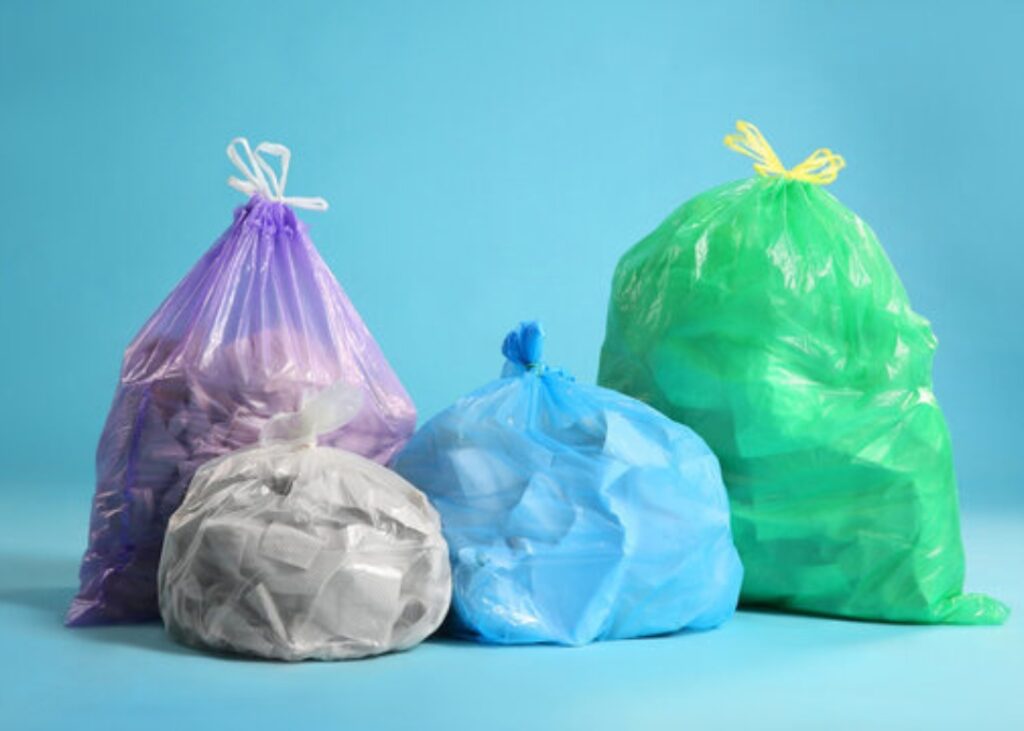
Garbage Bags
Garbage bags, also known as trash bags or bin liners, are essential waste management tools used to collect, contain, and dispose of various types of refuse. Available in a wide range of sizes, thicknesses, colors, and materials, garbage bags are designed for specific environments and waste types, from household and commercial to medical and industrial use.
1. By Material
a. High-Density Polyethylene (HDPE) Bags
Features: Thin, lightweight, resistant to punctures
Use: Light, non-sharp waste like paper, tissues, food scraps
Common in: Offices, restrooms, public spaces
b. Low-Density Polyethylene (LDPE) Bags
Features: Thicker, more flexible, better stretch and tear resistance
Use: Heavier, irregular, or wet waste
Common in: Kitchens, households, commercial settings
c. Biodegradable Bags
Features: Made from corn starch or PLA, decomposes in composting conditions
Use: Organic waste, eco-friendly disposal
Common in: Green bins, sustainable households, restaurants
d. Oxo-Biodegradable Bags
Features: Conventional plastic with additives to accelerate degradation
Use: General purpose, partial environmental benefit
Common in: Retail, light industrial use
e. Compostable Bags
Features: Fully decomposes under industrial composting; certified (e.g., ASTM D6400)
Use: Food waste, yard waste
Common in: Organic waste collection programs
2. By Strength & Thickness
a. Light-Duty Bags
Microns: 6–13 µm
Use: Dry, light trash like paper and packaging
Locations: Offices, bedrooms
b. Medium-Duty Bags
Microns: 14–24 µm
Use: Kitchen waste, mixed household trash
Locations: Kitchens, schools, restaurants
c. Heavy-Duty Bags
Microns: 25–50+ µm
Use: Sharp objects, industrial or construction debris
Locations: Commercial kitchens, construction sites
3. By Color (Color-Coding System)
Black: General waste (non-recyclable)
Green: Organic/biodegradable waste
Blue: Recyclable waste (paper, plastic)
Red: Biohazard waste (medical use)
Yellow: Infectious/clinical waste
Clear/Transparent: Visibility of contents, recycling
White: Aesthetic use in clean environments (offices, restrooms)
4. Specialty Garbage Bags
a. Drawstring Bags
Built-in drawstring for easy closure and carrying
Common in: Household and office bins
b. Scented Bags
Embedded with fragrance to mask odors
Common in: Kitchens, baby diaper bins
c. Recycling Bags
Made from clear or blue plastic, compliant with recycling guidelines
Common in: Homes and offices with recycling programs
d. Medical Waste Bags
Made from thicker, puncture-resistant plastic; often color-coded (red/yellow) and labeled
Common in: Hospitals, clinics, labs
e. Contractor Bags
Extra-large and super-thick (up to 6 mil)
Use: Construction debris, yard waste, heavy-duty cleanup
f. Pet Waste Bags
Small, scented, and easy to tie off
Common in: Parks, pet owners’ use